
‘Chess: The Musical’’s Revival is in the Shadow of New START Expiration
January 21, 2026
A story of two chess grandmasters, a love triangle with a Hungarian refugee, CIA and KGB tactics, and a climax set against the backdrop of Able Archer 83—narrative elements that would seemingly point to a cut-and-dry tragedy. But pair them with operettic pop music written by ABBA, and the result is a bonafide Cold War love story musical that draws star power in the echelon of Lea Michele (Glee), Aaron Tveit (Les Mis), and Nicholas Christopher (Hamilton).
Revived in October 2025, Chess: The Musical first opened in 1986 in London’s West End, the brainchild of Tim Rice (Joseph and the Amazing Technicolor Dreamcoat, Jesus Christ Superstar) and ABBA’s Benny Andersson and Björn Ulvaeus.
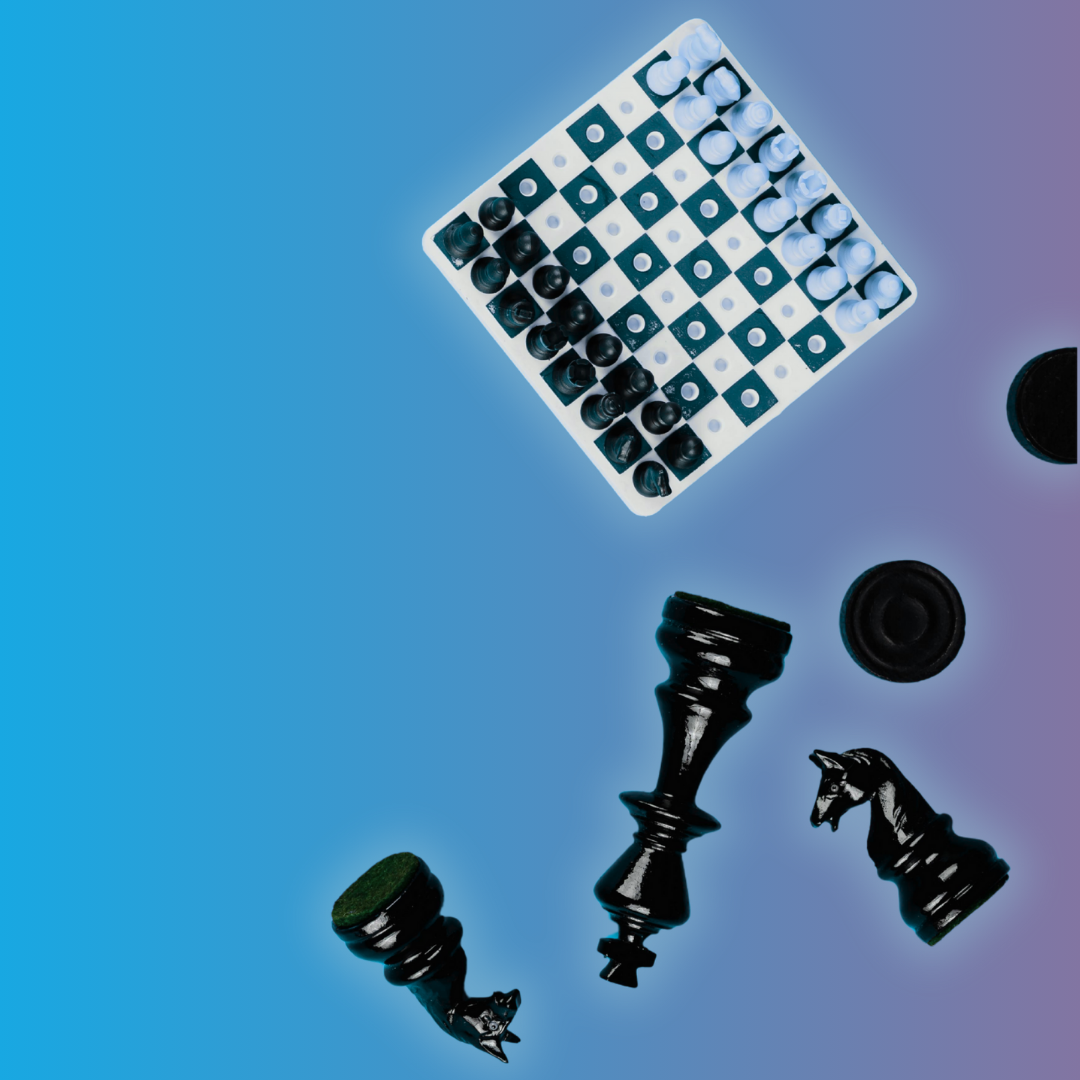
The story of Chess was written by Rice as a response to the Cold War tensions of the earlier 1980s, not-so-subtly centering the metaphor of the game of chess and the manipulations of Cold War. Chess tells the story of American chess grandmaster Freddie Trumper (Tveit), Soviet Russian grandmaster Anatoly Sergievsky (Christoper), and chess strategist and double love interest Florence Vassy (Michele). In the revival, two secondary characters are CIA and KGB agents who manipulate the three chess players as “pieces” on the board of US-Soviet diplomacy between 1979 and 1983.
If the original timing of Chess was on-the-nose, then its current revival might just reflect a case of prescient timing. And when it comes to socially conscious and fortified storytelling, timing is everything. US-Russian relations wax and wane with President Trump’s priorities and the Russian occupation of Ukraine. And as Chess entertains crowds on Broadway seven times a week, the sneaky star of the show is the impending February 5, 2026 expiration of the New START treaty—the last remaining bi-lateral nuclear arms control agreement between the United States and Russia.
I saw Chess on January 10 with just an idea of the musical’s plot and themes. Whatever my expectations were, they did not include references to SALT II, Able Archer 83, and the Hungarian Revolution of 1956, followed closely by Aaron Tveit knocking out high kicks in a Bangkok club set piece. In the second act climax, Able Archer 83 unfolds as the final chess match is underway—dramatic, but largely unexplained. For those who recognize it as one of our closest brushes with nuclear war, it’s effective. For others, it’s merely atmosphere while Anatoly Sergievsky plays for his freedom.
On the packed subway back to my hotel, I scrolled articles and interviews for evidence of what felt inevitable—that book writer Danny Strong decided to revive Chess because of our uneasy geopolitical moment. Instead, Strong describes the genesis moment as:
“The idea came to a head when, during a fateful night out with a friend, ‘after a couple whiskeys, I started claiming that I could rewrite ‘Chess,’’ he said.” (Ashbury Park Press).
A tall task to some, perhaps an easy A to others, the 1980s Chess was notoriously panned (and the revival is not seeing much better reviews), but beloved by musical nerds and ABBA aficionados alike. If not inspired directly by modern US-Russia relations, Strong does describe a pull to depict a more sophisticated retelling of the musical’s Cold War fulcrum. To the Hollywood Reporter, he said:
“I thought if I could infuse Cold War storylines and take true life Cold War events and put it into the story and intersect it with the love story and with the chess tournaments, it could perhaps be this kind of high-stakes dynamic story. That was my main approach to it.”
The Chess revival will run through the summer of 2026, meaning that on Thursday, February 5—the expiration date of New START—roughly 1,500 people will sit in Broadway’s Imperial Theater and watch a musical about the fickle nature of power when wielded by unwieldy hands. And nuclear weapons are the ultimate power, with arsenals forecasted to become more unregulated than they’ve been in decades, once New START expires. As I rode the train back home to Washington, DC, I couldn’t help but wonder how many of those 1,500 people would recognize what’s at stake in the nuclear world on February 5—not just between the US and Russia, but globally.
Chess wears its metaphor plainly—superpowers maneuvering, players sacrificed for positional advantage. But since the Cold War, nuclear risk has faded from popular awareness even though the stakes grow. Today, the metaphor lands differently. What once felt obvious now risks going unnoticed, and the dynamics of Chess serve as a reminder that nuclear strategy is still consequential and not at all abstract in 2026.
Through the decades, Ploughshares grantees remain steadfast in their commitment to understanding and communicating nuclear risk. And they have kept a keen eye on the 2026 New START expiration, producing rich informational guides and action items to keep the public in the loop ahead of the February 5 deadline. If you’re interested in learning more about New START, we recommend you check out these resources from Ploughshares grantees and partners:
- “Preventing the Next Nuclear Arms Race” – Win Without War webinar
- “Ask a Scientist: What Happens When There Are No Limits on US and Russian Nuclear Weapons?” – by Abby Figueroa, Union of Concerned Scientists
- “How Not To End A War” – by John Earth, Center for Arms Control & Non-Proliferation
- “Trump on New Start nuke treaty with Russia: if ‘it expires it expires'” – by Stavroula Pabst in Responsible Statescraft
- “After New START: Opportunities for Enhanced Nuclear Arms Control” – Physicists Coalition for Nuclear Threat Reduction
- Virtual Briefing: New Challenges and Next Steps After New START – Arms Control Association
If you’re interested in the intersection of pop culture and nuclear threat reduction, listen to NukeTalk’s new season, the Nuclear Movie Club, where we’re covering key movies from the nuclear film pantheon. You can also read a Screenrant interview with Ploughshares President Dr. Emma Belcher on Fallout Season 2, and another interview on the upcoming Denis Villeneuve adaptation of Annie Jacobsen’s Nuclear War: A Scenario.
