Chain Reaction 2026 (Seattle): When the World Changes, Someone Has to Explain It.
When the World Changes, Someone Has to Explain It.
Join us for an intimate luncheon conversation on nuclear risk in a time of war.
Wednesday, April 22, 2026 | 12:00 – 2:00 PM
The Ruins | 570 Roy Street, Seattle
Earth Day — because the stakes have never been higher.
REGISTER NOW
Seating is limited.
Can’t join us? Share this invitation with friends, family, and colleagues in the Pacific Northwest who care about our collective security.
The Moment We’re In
The U.S.-Israel military campaign against Iran—launched this February—has changed the equation. Strikes on Iranian nuclear facilities have not ended the nuclear question. They have made it more urgent. What happens to a nation’s nuclear calculus when diplomacy is replaced by bombs? What does the spread of conflict across the Middle East mean for the global nonproliferation order that has held, imperfectly but consequentially, for decades?
This is not an academic question. Iran is not an isolated case. Nations react when they witness the attacks on a country without a complete nuclear weapons program. Other countries are taking note, and decisions are being made on their nuclear programs.
Our speakers will bring two rare vantage points to this conversation: a view from space—the satellite imagery, open-source intelligence, and hard policy expertise that tracks nuclear programs around the globe—and a view from the ground—what it means for communities, for health, for the Pacific Northwest, and for what citizens can actually do.
Your Speakers
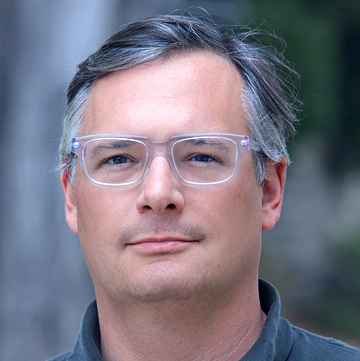
Jeffrey Lewis — The View from Space
Professor and Director, East Asia Nonproliferation Program, James Martin Center for Nonproliferation Studies, Middlebury Institute of International Studies
Jeffrey Lewis has made a career of knowing what governments don’t want you to know—and finding it in plain sight. Working from commercial satellite imagery, open-source intelligence, and decades of policy expertise, he and his team at Middlebury have tracked the nuclear programs of China, North Korea, Iran, Pakistan, and others with a rigor that has put his work in The New York Times, The Wall Street Journal, and Foreign Policy. He has been a columnist for Foreign Policy since 2013 and founded ArmsControlWonk.com, the leading public forum on disarmament and nonproliferation. Jeffrey’s work is animated by a conviction: that citizens equipped with real information make better decisions than citizens kept in the dark. He has advised the Secretary of State’s International Security Advisory Board and spent 15 years in Washington before concluding that the most powerful thing he could do was work in public—on behalf of all of us. On April 22, he’ll tell us what he’s seeing right now, and what it means.
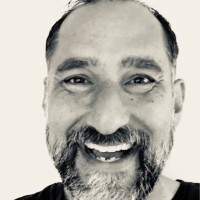
Max Savishinsky, MPA, MAIS, EdD — The View from the Ground
Executive Director, Washington Physicians for Social Responsibility (WPSR)
Washington Physicians for Social Responsibility has worked for decades at the intersection of public health and the gravest threats to human survival—nuclear weapons, climate change, and economic inequity. As its Executive Director, Max Savishinsky leads an organization that asks a simple, demanding question: what does nuclear risk mean for the health and lives of real people in Washington state, and what can we do about it? Max will bring a perspective that is often missing from policy conversations—the human cost, the community organizing reality, and the case for why citizens, health professionals, and local advocates aren’t bystanders in this story. They are, in fact, the only ones who can change it.
The Program
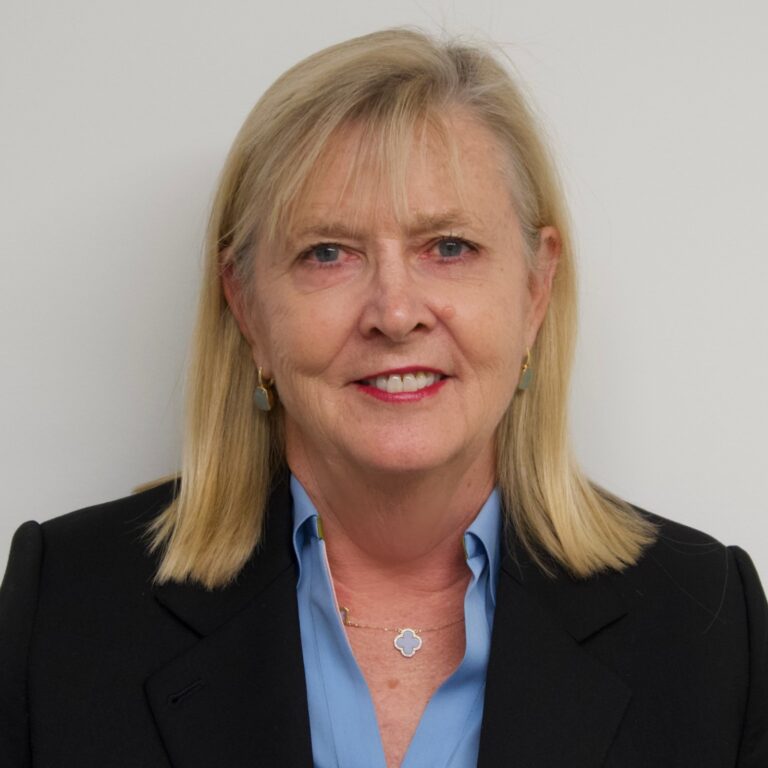
Opening Remarks: Gretchen Hund
Board Chair, Ploughshares | Former Senior Researcher, Pacific Northwest National Laboratory
Gretchen Hund has spent her career at the intersection of nuclear security and science policy, including work at Pacific Northwest National Laboratory on nuclear nonproliferation programs. She will set the stage for why this conversation matters—and why right now.
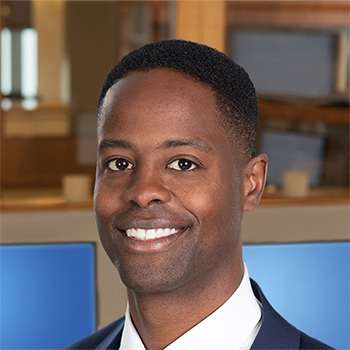
Moderator: Skyler Brown
Board Member, Ploughshares | Special Forces Green Beret (U.S. Army, Ret.) | Private Wealth Advisor, Goldman Sachs
Skyler Brown’s path to this table runs through West Point, the mountains of Afghanistan, and Goldman Sachs. A Special Forces Green Beret with a Persian Farsi language specialty, he deployed to Afghanistan, Saudi Arabia, and Turkey, and before that served as a high-altitude missile defense officer in South Korea. He holds an MBA from the University of Washington’s Foster School and now advises individuals and endowments at Goldman Sachs. Few people have held a missile defense post, served downrange in the Middle East, and spent their career thinking about portfolio risk. As moderator, he’ll bring that full range to bear—and then open the conversation to you.
Why This Gathering Is Different
This is not an average panel discussion. It is a moderated conversation between two people who have spent their careers trying to make nuclear risk legible to the rest of us—and who will bring that same directness to a room of people committed enough to show up.
Whether you have followed these issues for years or are trying to make sense of what you’ve been reading in the news, you will leave with something concrete: a clearer picture of what’s happening, what the risks are, and where diplomacy, the only reliable path to preventing the next nation from going nuclear, has room to succeed.
And you will leave having spent an Earth Day afternoon in one of Seattle’s most extraordinary rooms, with people who care deeply about the same things you do.
The Setting
The Ruins is Seattle’s best-kept secret—a private club of hand-painted frescoes, chandeliers, and a ballroom mural hiding Pacific Northwest creatures in plain sight—and the perfect place to be fully present for a conversation that matters. Lunch is by Herban Feast, one of Seattle’s most celebrated culinary teams.