8 Years Since the JCPOA—Lessons (Not) Learned
May 8, 2026
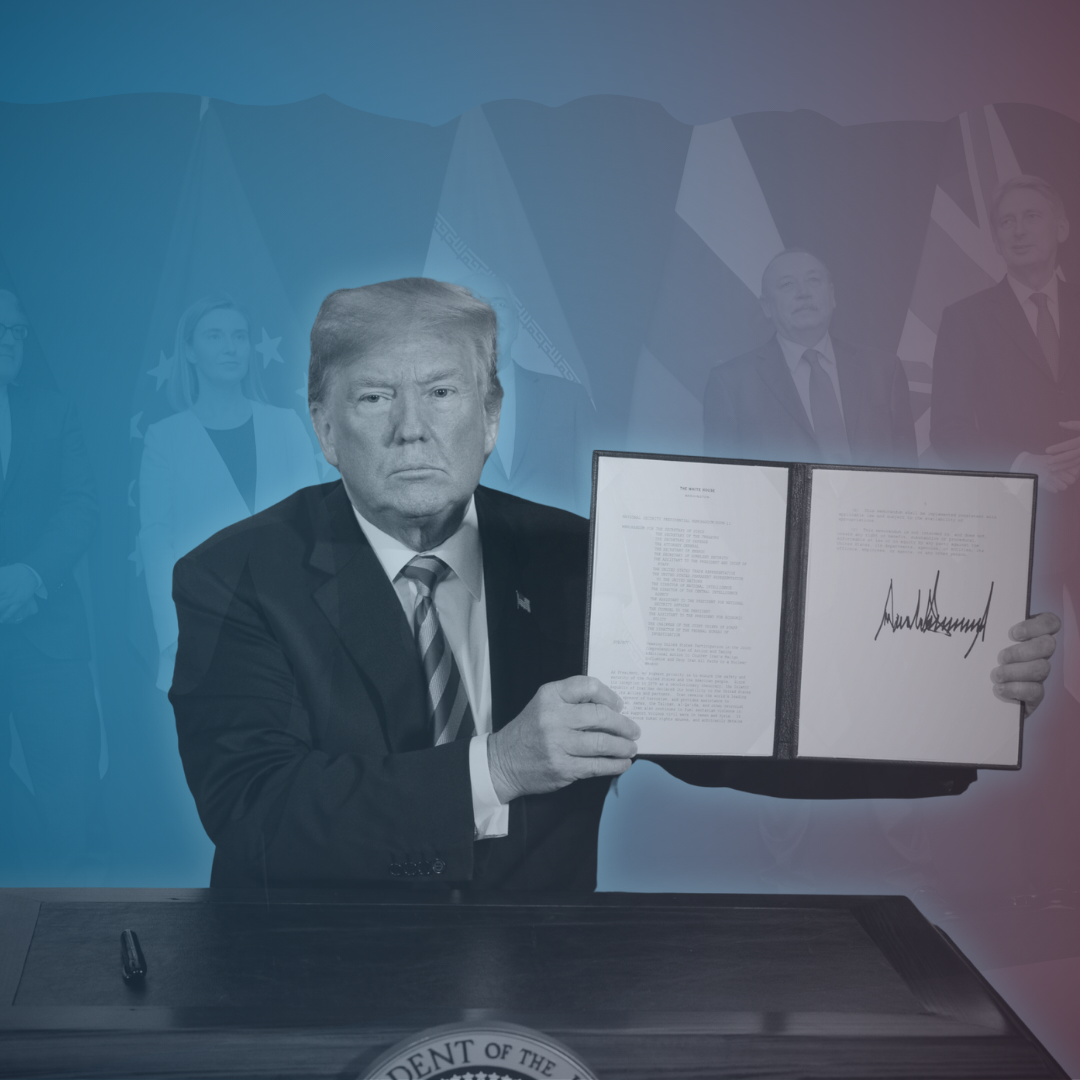
Today marks eight years since President Trump withdrew the United States from the Joint Comprehensive Plan of Action (JCPOA), commonly known as the Iran Nuclear Deal, which was first signed in 2015. During his first term, Trump drove this action under the pretense that he would create a stronger, better deal with Iran.
The work we do today holds implications for the future—not just for issues of nuclear threats but for the safer, more secure world we’re all striving for. This was top of mind in the early 2010s and throughout the Obama administration’s second term when the nuclear threat reduction community seized the moment for a landmark nonproliferation agreement. The JCPOA truly was the first-of-its-kind agreement to prevent a new nuclear weapons state with a sound plan to strengthen nuclear safeguards while providing Iran with much-needed sanctions relief.
We knew then what we know now: there is no military solution to Iran’s nuclear program. The US cannot simply bomb away Iran’s nuclear knowledge, nor entice Iran to hand over its nuclear materials through military action. Worse, in the absence of a deal, a war could feel inevitable, and a war could have the opposite effect: push Tehran to make the political decision to weaponize.
Since this day in 2018, we knew that in the absence of diplomatically-agreed-to constraints, the ripple effects of a war, or a new nuclear weapons state, would be felt for generations. The very consequences this community cautioned about for years are now unfolding before us.
As of today, the US and Iran are months into a conflict that began with the US and Israel’s strikes against Iran on February 28, 2026. Throughout March and April the Trump administration offered a slew of rationales: regime change, supporting the people of Iran, preventing nuclear build up … the list goes on. While this confusing series of justifications became almost comical to the US press and public, the true effects of the war are impossible to ignore: the countless civilian lives lost, the geopolitical tensions that may take years to resolve, and the generations to come that will suffer because of the toll on infrastructure and resources across the region. The cost of this war for the US is estimated at $72 billion dollars.
On top of this, Trump himself has now twice spewed alarming rhetoric insinuating nuclear use. He wrote “a whole civilization will die tonight” in a Truth Social post on April 7, and then last night, said: “If there’s no cease-fire, you’re not going to have to know. You’re just going to have to look at one big glow coming out of Iran.” Nuclear weapons threats such as this—in a country where the President has the sole authority to launch such weapons must be taken seriously and condemned. Such threats will only make diplomatic progress harder to achieve.
As we look back eight years ago to the moment when Trump withdrew the US from the JCPOA, it’s worth remembering that Iran was in compliance with the agreement. Diplomacy worked. Now, if Trump is ready to pursue the “stronger” or “better” deal that he promised in 2018, he must cease making such remarks that evoke massive violence against civilians.
What’s on the table now?
This week, news broke that there could be a Memorandum of Understanding on the table. This MOU, or framework, could pave the way for a stronger, more durable agreement on the nuclear issue, and many more related issues such as sanctions relief and agreements on Iran’s missile program.
The news is moving at an incredible speed, so much so that even an article (like this one!) may not hold true the following morning. But one thing remains true—day in and day out—our grantees and partners will be the resource you need to make sense of unfolding events. In this murky landscape, they are working to analyze and uncover what sort of framework will be on the table as it develops. And, we are poised to ensure that should a deal come to fruition we can advance diplomatic steps towards a strong nuclear agreement that successfully puts Iran’s nuclear program in a box, while simultaneously providing sufficient sanctions relief to support the people of Iran after this war.
Perhaps sooner than later, books will be written about this senseless, catastrophic war. To get there we must first seek an end to this war, one that is achieved diplomatically, because we know that is the only foolproof way to advance peace.