What Comes After Conflict? Young Women Imagine a Future Beyond War
October 16, 2026
What happens when you give women, particularly young women, the time, tools, and space to dream up a society better than the reality they inherited?
Tomorrow’s Women, the only cross-border peace-building organization in Israel, Gaza, and the West Bank exclusively focused on investing in the leadership skills of young women as a pathway to peace, put that question to the test with the launch of Futures Lab in 2026. In this piece, Ploughshares Program and Grants Manager Kaite Lower shares about her recent visit to Northern Ireland to attend the Tomorrow’s Women (TW) Futures Lab.
Somewhere between Dublin and Belfast is the small seaside village of Annalong. With nearly 2,000 residents and no pub in sight, it doubles as a quiet home for locals and a transformational space for visitors. In September, it served as the meeting ground for the inaugural Tomorrow’s Women (TW) Futures Lab–a pilot leadership initiative for Israeli and Palestinian activists, civic changemakers, and women interested in political leadership.
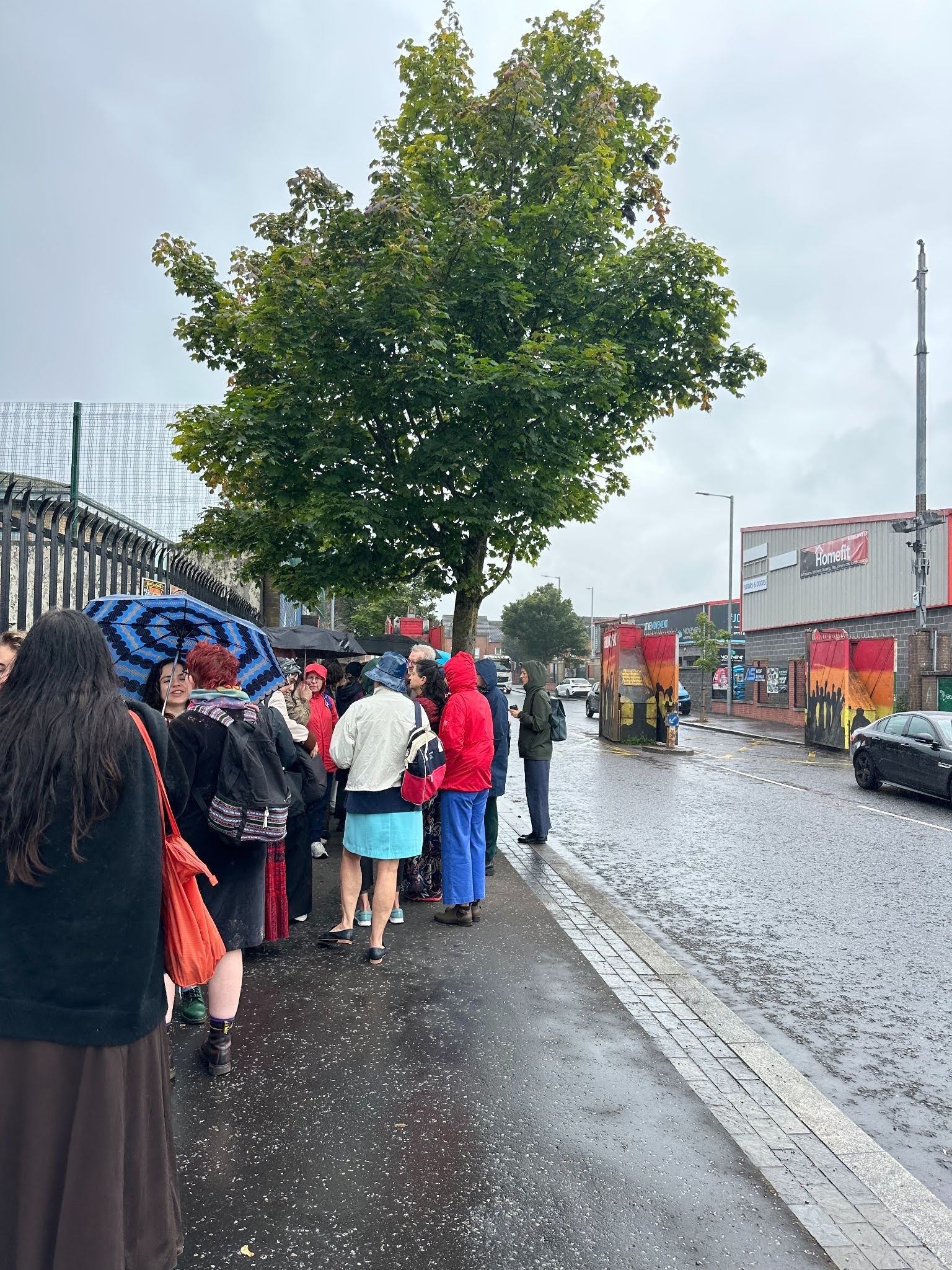
Walking tour of Belfast with Futures Lab participants and faculty.
On a rainy August afternoon, the cohort of Israeli and Palestinian women trickled into Annalong for a six-day convening to learn from women who have built political movements, challenged war and militarism, and negotiated across deep divisions. The gathering was hosted at Friends Forever International’s peace center and supported by partners such as the Nobel Women’s Initiative and Irish activists involved in crafting and sustaining the Good Friday Agreement. It marked the culmination of a leadership series that scaled from individual to bi-national to international collaboration.
Even arriving was no small feat as a handful of participants from Gaza and the West Bank had no choice but to join virtually when they were left unable to travel to Northern Ireland. Their absence was as a tone-setting reminder of how visas, borders, and military checkpoints are the faceless forces that ultimately determine who can and cannot participate.
Grassroots activist and Washington Congresswoman Pramila Jayapal kicked off the programming as the opening guest speaker. Her physical presence was both meaningful and symbolic as Futures Lab was modeled off Jayapal’s Resistance Lab, an introductory training focused on how authoritarianism takes root and how people-powered movements have fought back. She spoke in great detail about her journey from community organizing to political leadership, navigating harassment and gendered attacks, and how to center principled compromise in environments that require significant negotiation. Jayapal’s insistence that change occurs through shared strategy, not templates, was an apparent theme as the week carried on. Her willingness to answer questions with transparency and directness set the bar and tone for the entire program.
Participants engaged in interactive workshops, Q&As, twice-daily reflection circles, and site visits; and learned from global activists, Nobel laureates, Irish activists, and Israel/Palestine peace and security experts. Featured activists included Jody Williams, Maria Butler, Negina Yari, Ann Patterson, Avila Kilmurray, Anne Walker, Nida Shoughry, and Limor Yehuda – all of whom have transformed conflict into collaboration, division into hope. Each leader’s story demonstrated the crucial role women play in moving peace and political processes forward and demonstrated how much we stand to learn from shared struggle.
The significance of Northern Ireland’s own journey through violent conflict, stained too by loss and left with a fragile peace, resonated with the group. Local voices spanning Derry to Belfast disclosed illuminating details on how women successfully demanded political representation, the lasting psychological and economic effects of militarism, and lessons learned from the Good Friday Agreement. Their willingness to reflect on both the success and failure within their personal and national history paired with a fierce commitment to healing their communities from within was a powerful sounding board of cross-border solidarity and resilience.
Credit is due to the Tomorrow’s Women team and the remarkable expertise imparted by generational leaders; however, what made this program unique was the cohort itself. In rooms of power, where difficult subjects and obvious truths are often shrouded in taboo and remain untouchable, these young women demanded answers, attention, and accountability. Day after day, session after session, they asked hard, complex questions:
Whose safety matters? Whose story is believed? How do we make peace more profitable than war? How can communities find peace if they have never known it? How do we move forward? Do we even want to move forward? What can we do right now?
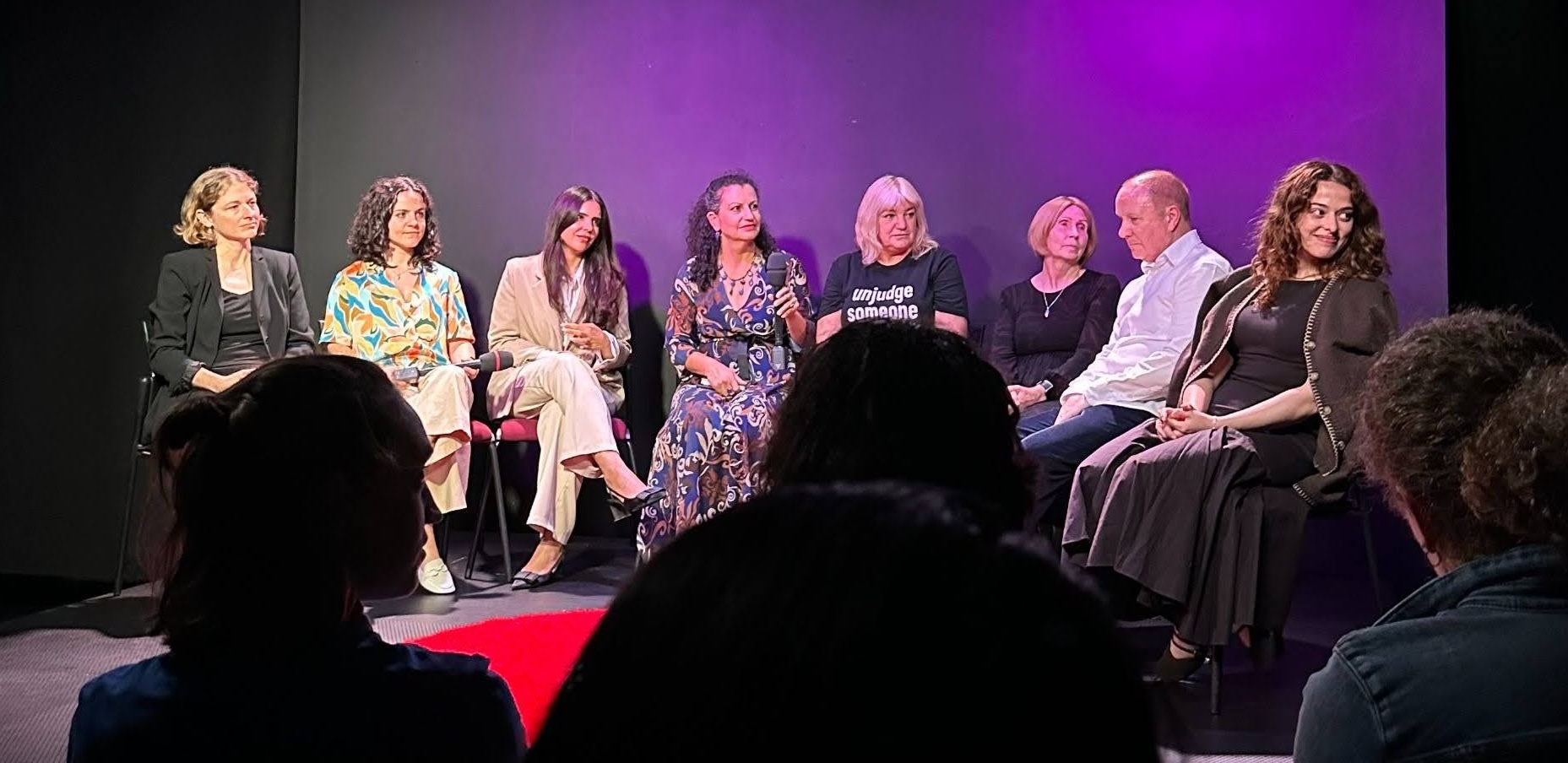
Q&A during the Proof of the Possible storytelling event in Belfast.
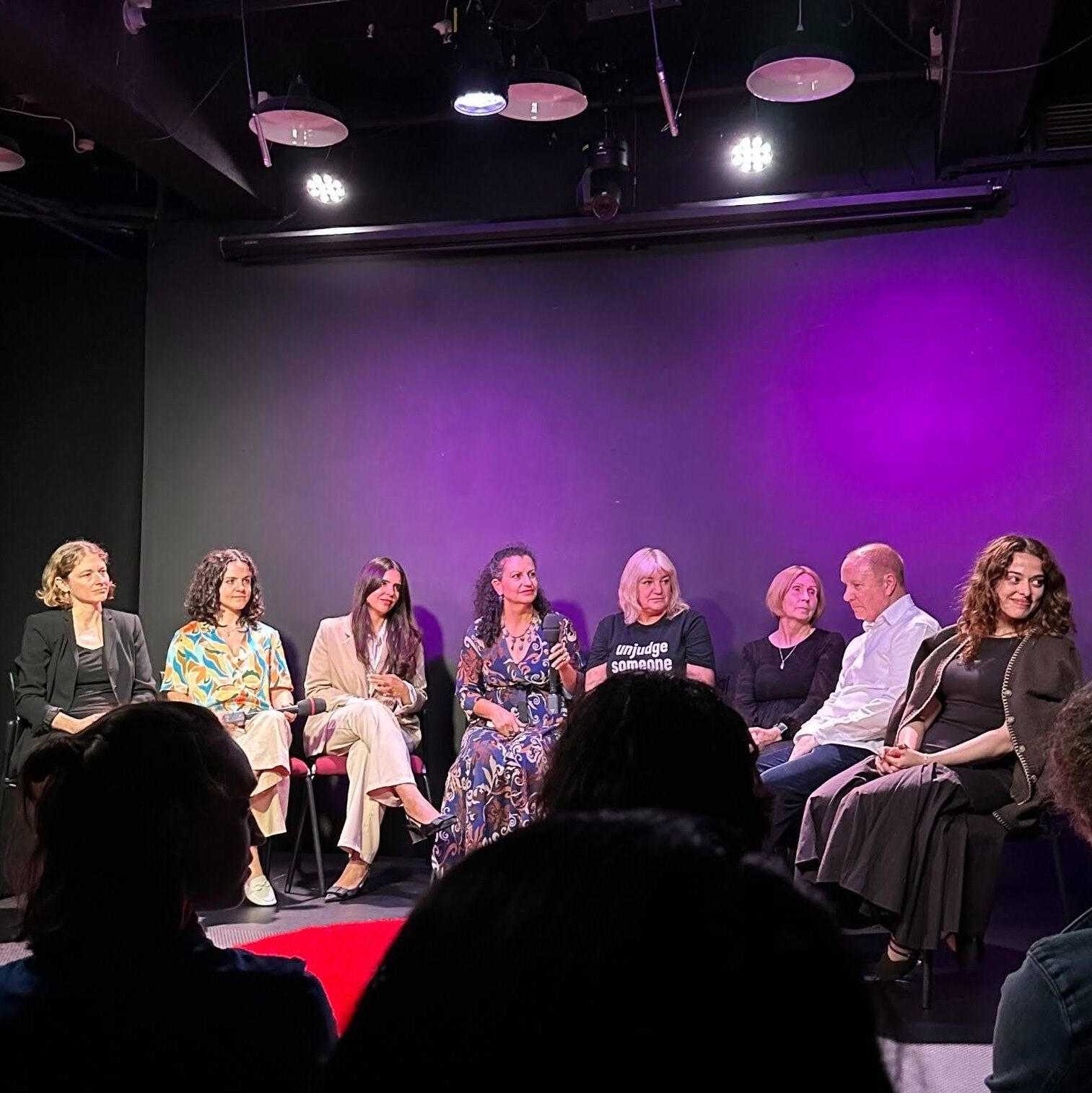
Participants and faculty had the opportunity to share their stories on stage in Belfast during an evening of storytelling from Palestinian, Israeli, and Northern Irish citizen peacemakers and activists. The women were prepped and ready to take the stage, having been part of a Storytelling Masterclass offered by Futures Lab. It was made clear that if you equip people with the tools to make sense of their experiences, and empower them to share, their impact and ability to move others is vast.
The week drew to an inevitable close and it wrapped up as powerfully as it kicked off. In the final session, Dr. Limor Yehuda, an Israeli legal scholar and human rights lawyer, asked the cohort: In a reality where a lasting peace agreement is reached in Israel and Palestine, what do you dream of? In company with many beautiful responses, the answer that floated to the top came from an Israeli and Palestinian pair: to grieve. The ability, for both Israelis and Palestinians, and for all individuals caught within the tides of immeasurable loss and generational struggle, to collectively recognize what has been lost and to move forward, slowly, in mutual acceptance.
These women–artists, activists, teachers, social workers, lawyers–will be the ones to create and maintain lasting peace in their communities. Yes, diplomacy at the highest level is urgent; and undeniably, yes, the future of Israel and Palestine, along with the entire region, is a purposefully complex international issue steeped in an endless history of political and economic discord. However, Futures Lab is a bright reminder that real transformation requires hope and truthful reflection; to listen to the demand for structures that transcend what exists. Most importantly, it’s a reminder of our responsibility to urgently invest in the individuals and communities that will live and carry out enduring change and peace.
Tomorrow’s Women is a new grantee through the Cowles Fund at Ploughshares. The Cowles Fund aims to promote a better understanding of the root causes of conflict in regions where nuclear weapons are present – in this case, through supporting women and youth leadership efforts. Tomorrow’s Women has trained 800+ young women from Israel, Palestine, and the US to engage in Track II diplomacy, compassionate dialogue, and cross-border relationships to address historical traumas, the root causes of conflict, and regional stability in a nuclear-relevant context.